Search This Blog

Showing posts with label international awards. Show all posts

Wednesday, 16 March 2022

Judging underway for the 2022 Hippocrates Prize for Poetry and Medicine

Entries have been received for the 2022 Hippocrates Prize for Poetry and Medicine from 32 countries for its FPM-Hippocrates Open and Health Professional Awards and from 22 countries for the Hippocrates Young Poets’ Prize.  These well-established international awards are supported by medical society the Fellowship of Postgraduate Medicine and the Cardiovascular Research Trust the Healthy Heart Charity.

Short-listed and commended poets will be notified in early April. Winners of the FPM-Hippocrates Awards will be announced by the judges at the online Hippocrates Awards Ceremony on 30th May 2022 for which registration is free.


Awards in the Hippocrates Prize are for an unpublished poem in English of up to 50 lines on a medical theme by entrants from anywhere in the world. Previous winners have come from Canada, Hong Kong, Ireland, New Zealand, the UK and the USA.

With a prize fund of £5500 for winning poems in the Open International category and international health professional category, and £500 for the international Young Poets Award, the Hippocrates Prize is one of the highest value poetry awards in the world for a single poem.

Judges for the 2022 FPM-Hippocrates Prize Open and Health Professional awards are American poet Jeffrey Harrison, British medical researcher Professor Peter Barnes FRS and BBC newsreader, writer and actor Zeb Soanes. European/American author and poet Ellen Hinsey is judge for the Hippocrates Young Poets’ Prize. See more on the judges below.

The International Hippocrates Prize is awarded in three categories:

- a £1000 first prize, £500 second prize and £250 third prize in the FPM-Hippocrates Open category, which anyone in the world may enter. There are a further ~20 commendations in the Open category

- a £1000 first prize, £500 second prize and £250 third prize in the FPM-Hippocrates Health Professional category, which is open to Health Service employees, health students and those working in professional organisations anywhere in the world involved in education and training of health professional students and staff. There are a further ~20 commendations in the Health Professional category

- a £500 award for the Hippocrates Young Poets Prize for an unpublished poem in English on a medical theme. Entries are open to young poets from anywhere in the world aged 14 to 18 years. There are further commendations in the Young Poets category. There is no entry fee for the Young Poets prize.

The Hippocrates Initiative for Poetry and Medicine – winner of the 2011 Times Higher Education Award for Innovation and Excellence in the Arts – is an interdisciplinary venture that investigates the synergy between medicine, the arts and health.

Notes for editors
For more on the 2022 Hippocrates Prize email hippocrates.poetry@gmail.com 

Support for the 2022 Hippocrates Prize

The 2022 FPM-Hippocrates Open Awards and FPM-Hippocrates Health Professional Awards are supported by the Fellowship of Postgraduate Medicine. The FPM, founded in 1918,  is a UK medical society which publishes the international journals the Postgraduate Medical Journal and Health Policy and Technology. 

The 2022 Hippocrates Young Poets Prize is supported by the Cardiovascular Research Trust, a healthy heart charity founded in 1996, which promotes research and education for the prevention and treatment of disorders of the heart and circulation. The charity has a particular interest in avoiding preventable heart disease through educating school students.

2022 Hippocrates Prize Judges

Peter Barnes FRS has been Margaret Turner-Warwick Professor of Medicine at the National Heart and Lung Institute and Honorary Consultant Physician at Royal Brompton Hospital, London since 1987. He was elected a Fellow of the Royal Society in 2007, the first respiratory researcher elected as FRS for over 150 years. He is a Past-President of the European Respiratory Society (2013/14). His research is focused on cellular and molecular mechanisms of asthma and chronic obstructive lung disease (COPD), understanding and developing therapies and research into biomarkers for these diseases. He is involved in multidisciplinary translational research which integrates basic science with clinical studies, thereby providing novel insights into common airway diseases. He qualified at Cambridge and Oxford Universities and he has published over 1000 peer-review papers on asthma, COPD and related topics and has edited over 40 books. 

He is amongst the top 50 most highly cited researchers in the world and has been the most highly cited clinical scientist in the UK and the most highly cited respiratory researcher in the world over the last 20 years. He is an Emeritus National Institute for Health Research Senior Investigator, a Master Fellow of the American College of Chest Physicians and a member of the Academia Europaea. He is also a member of the Council of medical society the Fellowship of Postgraduate Medicine. 

Jeffrey Harrison is the author of six full-length books of poetry, including, most recently, Between Lakes (Four Way Books, 2020), selected as a 2021 Must-Read Poetry Book by the Massachusetts Center for the Book, Into Daylight (Tupelo Press, 2014), winner of the Dorset Prize, Incomplete Knowledge (2006), and Feeding the Fire (2001), which won the Sheila Motton Award from the New England Poetry Club. His first book, The Singing Underneath, was selected by James Merrill for National Poetry Series in 1987. 

A volume of his selected early poems, The Names of Things, was published in the U.K. by the Waywiser Press in 2006. He has received fellowships from the Guggenheim Foundation, the National Endowment for the Arts, and the Bogliasco Foundation, among other honors, and his poems have appeared widely in magazines and anthologies, including Best American Poetry, The Pushcart Prize volumes, Poets of the New Century, The Twentieth Century in Poetry, and been featured regularly in Ted Kooser’s column American Life in Poetry, The Writer’s Almanac, Poetry Daily, and other online and media venues. 

Reviewing Incomplete Knowledge for the Virginia Quarterly Review, critic George David Clark praises Harrison’s “seemingly effortless access to both desperate sorrow and a certain joyous and musical gusto—somewhat paradoxical attitudes Harrison often convincingly achieves within the space of a few lines.”

Jeffrey Harrison has taught at George Washington University, Phillips Academy, the University of Southern Maine, and Framingham State University. He lives in Massachusetts and can also be found at jeffreyharrisonpoet.com.

American poet Ellen Hinsey is judge for the 2022 Hippocrates Young Poets’ Prize for Poetry and Medicine. She is the author of nine books of essays, dialogue, poetry and translation. Her essays on Central and Eastern Europe are collected in Mastering the Past: Contemporary Central and Eastern Europe and the Rise of Illiberalism (2017). Her book-length dialogue with Lithuanian poet and dissident Tomas Venclova, Magnetic North explores post-war Lithuanian and Eastern European culture and ethics under totalitarianism. Hinsey's other books include: The Illegal Age, Update on the Descent, which draws on her experience at the International Criminal Tribunal for the Former Yugoslavia in the Hague, The White Fire of Time and Cities of Memory (Yale University Series Award). Her work has appeared in publications such as The New York Times, The New Yorker, Poetry Review, The Irish Times and Poetry, among others. She is a former fellow of the American Academy in Berlin and the DAAD Kunstlerprogam in Berlin. She is the international correspondent for the New England Review and is currently a senior editor at the New American Studies Journal (Göttingen).

Zeb Soanes is a newsreader and reassuring voice of the Shipping Forecast to millions of listeners on BBC Radio 4. He is a regular on The News Quiz, has reported for From Our Own Correspondent, read for Poetry Please and presented Saturday Classics on BBC Radio 3. He has announced some of the biggest events in recent years from the final result of the Brexit referendum and the election of Donald Trump to the unfolding of the Coronavirus pandemic. Sunday Times readers voted him their favourite male voice on UK radio. At literary festivals including Hay and Edinburgh he regularly chairs discussions with best-selling authors including Francesca Simon, Patrick Gale and David Walliams. His long association with The Shipping Forecast has led him to read it from the top of a lighthouse, at the closing ceremony of the Beijing Olympics and to open London Fashion Week.

He studied Creative Writing and Drama at UEA and has written for The Observer, Country Life and The Literary Review.  In 2019, St Martin in the Fields commissioned him to rewrite the libretto for Vaughan Williams’ 1958 nativity pageant, The First Nowell, presented as a charity gala.He trained as an actor and has performed in BBC radio dramas with Simon Russell-Beale and Toby Jones.  He played Derek Nimmo in the story of the classic BBC comedy series All Gas and Gaiters and was the sinister librarian to David Warner’s Doctor Who for Big Finish Productions. In the short film, Mayday, starring Juliet Stevenson, he relayed the unfolding chaos of an earthquake in London. During the 2020 coronavirus lockdown he created celebriTEAS, a comedy podcast, impersonating his theatrical heroes to raise money for the Equity Benevolent Fund and Acting for Others which received praise from Russell Davies and Stephen Fry.

His best-selling first book for children, Gaspard the Fox, inspired by his remarkable encounters with an urban fox, was published in May 2018, illustrated by James Mayhew.  It was followed by Gaspard Best in Show (2019). The latest adventure, Gaspard’s Foxtrot (2021), was conceived as both a book and narrated concert work, composed by Jonathan Dove, which received its world premiere at the 2021 Three Choirs Festival.

Zeb is an active patron of Awards for Young Musicians and the British Association of Performing Arts Medicine. In recognition of his efforts to culturally rehabilitate the urban fox through his books, he was appointed the first patron of The Mammal Society. He regularly supports the work of St Martin in the Fields with homelessness and, in 2017, hosted a gala auction of theatrical portraits of the Kenneth Branagh Theatre Company, raising over a hundred thousand pounds. In his hometown of Lowestoft he is a committed supporter of the Samaritans.

Organisers of the Hippocrates Initiative for Poetry and Medicine
Professor Donald Singer is a clinical pharmacologist and President of the Fellowship of Postgraduate Medicine. His interests include public understanding of drugs, health and disease and prevention and treatment of disorders of the heart, brain and circulation. Professor Michael Hulse is a poet and translator of German literature. 
Until 2020, he taught poetry and comparative literature at the University of Warwick. He has won the National Poetry Competition and is the only poet to have won the Bridport Poetry Prize twice. He  has also translated more than sixty books from the German, including titles by Goethe, Rilke, Jakob Wassermann, Alfred Andersch, W. G. Sebald, and Nobel Laureates Elfriede Jelinek and Herta Müller. His translations have been shortlisted for every major translation award, including the PEN Translation Prize (US), the Aristeion Translation Prize and the Schlegel-Tieck Prize.

Tuesday, 9 March 2021

Judging underway for the 12th Annual International Hippocrates Prize for Poetry and Medicine - entries from 34 countries


Entries are now closed for the Open and Health Professional awards and for the Young Poets Prize in the 2021 Hippocrates Prize for Poetry and Medicine. Poems have been submitted from 34 countries from Australia to the USA and from Iceland to India. 

The Open and Health Professional awards in the Hippocrates Prize are supported by medical society the Fellowship of Postgraduate Medicine. The Young Poets Award for poets aged 14-18 years is supported by healthy heart charity The Cardiovascular Research Trust.

The Hippocrates Prize is one of the highest value poetry awards in the world for a single poem.

There is a prize fund of £500 for winning poems in the FPM-Hippocrates Open category and the FPM-Hippocrates health professional category.

Entries remain open for the Hippocrates Young Poets Prize for Poetry and Medicine.

Anne Barnard, Keki Daruwalla, Anna Jackson, Neena Modi  


Senior New York Times correspondent Anne Barnard, distinguished poets 
Keki Daruwalla and Anna Jackson and paediatrician Professor Neena Modi, President-Elect of the British Medical Association, are the judges for the 2021 Hippocrates Prize for Poetry and Medicine. Ann Barnard, Keki Daruwalla and Professor Neena Modi will judge the Open and Health Professional awards and Anna Jackson judge the Young Poets’ Prize for Poetry and Medicine.

Co-organiser Donald Singer said: “We are delighted to have such strong international interest already and such a distinguished panel of judges for the 2021 Hippocrates Prize.”

Read more about the judges ... 

2021 International FPM-Hippocrates Open and Health Professional categories
In each category: 1st Prize £1000, 2nd Prize £500, 3rd Prize £250 and up to 20 commendations. Entries were received from 28 countries for these awards in the 2020 Hippocrates Prize.

There are a limited number of free entries for low-income writers for these awards.
Click here for how to apply for a free entry.

2021 Hippocrates Young Poets’ Prize for Poetry and Medicine
Entries for this prize are free.The Young Poets’ Prize is for poets aged 14-18 years from anywhere in the world.  The Young Poets’ Prize is £500. Entries were received from 19 countries for these 2020 Hippocrates Prize awards.

Awards in the Hippocrates Prize are for an unpublished poem in English of up to 50 lines on a medical theme by entrants from anywhere in the world. Previous winners have come from Canada, Hong Kong, New Zealand, the UK and the USA.

The International Hippocrates Prize is awarded in three categories:

- a £1000 first prize, £500 second prize and £250 third prize in the FPM-Hippocrates Open category, which anyone in the world may enter. There are a further ~20 commendations in the Open category

- a £1000 first prize, £500 second prize and £250 third prize in the FPM-Hippocrates Health Professional category, which is open to Health Service employees, health students and those working in professional organisations anywhere in the world involved in education and training of health professional students and staff. There are a further ~20 commendations in the Health Professional category

- closing date 1st March for the £500 award for the Hippocrates Young Poets Prize for an unpublished poem in English on a medical theme. Entries are open to young poets from anywhere in the world aged 14 to 18 years. There are further commendations in the Young Poets category. There is no entry fee for the Young Poets prize.

The Hippocrates Initiative for Poetry and Medicine – winner of the 2011 Times Higher Education Award for Innovation and Excellence in the Arts – is an interdisciplinary venture that investigates the synergy between medicine, the arts and health.

Notes for editors
For more on the Hippocrates Prize email hippocrates.poetry@gmail.com 

Support for the 2021 Hippocrates Prize

The 2021 FPM-Hippocrates Open Awards and FPM-Hippocrates Health Professional Awards are supported by the Fellowship of Postgraduate Medicine. The FPM, founded in 1918, is a UK medical society which publishes the international journals the Postgraduate Medical Journal and Health Policy and Technology. 

The 2021 Hippocrates Young Poets Prize is supported by healthy heart charity The Cardiovascular Research Trust founded in 1996, which promotes research and education for the prevention and treatment of disorders of the heart and circulation. The charity has a particular interest in avoiding preventable heart disease through educating school students.

Wednesday, 25 March 2020

New International Awards from the FPM for trusted Medical Writing in Social Media


Medical society the Fellowship of Postgraduate Medicine is partnering with its journals – Health Policy and Technology and the Postgraduate Medical Journal – to launch international awards for well-informed, clear writing on health matters in social media. 
Patients, members of the public, health professionals and policymakers increasingly use social media as a source for health information and to guide important decisions on choices and actions about prevention and treatment of disease. Where the information is accurate and easy to follow, this can be very helpful. However, we are increasingly at the mercy of a spectrum of unreliability, from incomplete or inaccurate reports, to claims that inconvenient truths are ‘fake news’.

These are not new problems. Sinclair Lewis in his geopolitical satire of 1935 It Can’t Happen Here refers to fake news in the political domain [1]. George Orwell features unreliable reporting by government-controlled media in his dystopian 1984 [2]. However, the geographical reach and speed of spread of reports in current social media and present numerous ways to disseminate ‘alternative facts’ have new global implications for the consequences ofunreliable ‘news’ [3].

Concerns in the health sector include social media posts making spurious health claims for ‘alternative medicines’ and containing misinformation about causes, severity and treatments of disease – from coronaviruses [4] and HIV infection [5] to cancers [6]. A striking example of the serious impact on the public of misinformation is a sustained large increase in vaccine hesitancy for measles and other immunisations since the late 1990s [7]. This arose from a later withdrawn report in the Lancet of a link between autism and measles immunisation [8]. Although findings in the report were judged to be fraudulent, anti-vaccine activists persist in providing misleading information on social media based on this report. Particularly worrying is how difficult it continues to be for international public health authorities to counter this vaccine hesitancy. Immunisation rates against measles remain sub-optimal 22 years after the original flawed report [8]. Social media undoubtedly plays a role here, and its potency is reflected in the fact that just one source is enough to disseminate and propagate untruths [9]. However, this very potency also represents a means to inform and educate patients, members of the public, health professionals and policymakers.

The FPM International Awards for Medical Writing in Social Media are new annual awards for medical graduates from anywhere in the world. To be eligible, an article or blog must be in English and should have been published online between 1st July 2019 and the closing date for the awards: 30th June 2020. There will be up to 5 prizes per year. Each award winner will receive a £100 prize. Award winners will also have winning content published in one of the FPM’s journals, either Health Policy and Technology or the Postgraduate Medical Journal.

For more details and information about how to enter online, see the website for the FPM International Awards for Medical Writing in Social Media.

References
1. Sinclair Lewis. It Can’t Happen Here. 1935, Doubleday, Doran and Company. ISBN 045121658X.
2. George Orwell. Nineteen Eighty-Four: A Novel.  1949, Secker and Warberg. OCLC 470015866.
3. Launer J. The production of ignorance.  Postgrad Med J 2020 xxxxxx.
4. Frédéric Lemaître. China denounces being placed under quarantine. Le Monde. 4th February 2020.
5. National AIDS Trust. HIV fake news: NAT sets out to tackle misinformation. December 1st, 2017
 www.nat.org.uk/press-release/hiv-fake-news-nat-sets-out-tackle-misinformation Accessed 4th February, 2020.
6. Bessi A, Coletto M, Davidescu GA, et al. Science vs conspiracy: collective narratives in the age of misinformation. PLoS One. 2015;10:118093.
7. Vaccine Hesitancy. European Centre for Disease Prevention and Control. www.ecdc.europa.eu/en/immunisation-vaccines/vaccine-hesitancy Accessed 29th January 2020.
8. Retracted Lancet 2010;375:445: Wakefield AJ, Murch, SH, Linnell J et al. Ileal-lymphoid-nodular hyperplasia, non-specific colitis, and pervasive developmental disorder in children. Lancet 1998;351:637-641.
9. Waszakab PM, Kasprzycka-Waszak W, AlicjaKubanek, A. The spread of medical fake news in social media – The pilot quantitative study. Health Policy Technol 2018;7(2):115-118.

Tuesday, 12 February 2019

Still time to submit an abstract for the EACPT Congress in Sweden: 29th June to 2nd July 2019

The next EACPT Congress will be held from 29th June to 2nd July in 2019 in Stockholm as a partnership between the EACPT and the Swedish Society for Pharmacology, Clinical Pharmacology and Therapeutics. 

The Congress will address Tomorrow’s Healthcare Challenges and will be held at the City Conference Centre – 5 minutes from Stockholm Central Station.

Abstract closing date extended to 14th March.

Register online 

The Congress Reception on the evening of Saturday 29th June, will be held at Stockholm City Hall, the venue of the Nobel Prize banquet.

The Keynote Opening Lecture will be given by the President at the Karolinska Institute, Professor Ole Petter Ottersen, on global health and clinical pharmacology.

Around 60 invited speakers are expected from throughout Europe and beyond. Congress keynote lectures, sessions and themes will include:
  • Advanced therapies
  • Chronic disease
  • Clinical pharmacologists versus computers
  • Closing the money gap
  • Drug regulation in the 2020’s
  • EACPT meets Asian Societies
  • EPHAR-EACPT joint symposium on personalised medicine
  • Ethics in clinical research
  • Global Health
  • How to become a clinical pharmacologist
  • How to measure drug exposure
  • How to measure drug use
  • How to perform a health economic study
  • Interprofessional exchange for better drug treatment
  • Misuse of medicines
  • Patient empowerment
  • Preparing tomorrow’s prescribers
  • Prescribing and deprescribing
  • Targeting small populations
  • The critically ill patient
  • Treating ageing populations
  • Treating cancer
  • Treating children
Major awards to be presented at the Stockholm Congress include the EACPT Lifetime Achievement Award and the biennial EACPT Scientific Award for best publication on a clinical pharmacology or therapeutic theme.

Opportunities for EACPT Associate Members include
* discounted registration fees for EACPT meetings
* networking with colleagues worldwide through the global EACPT network of Associate Members
* active involvement in EACPT Working Parties and other activities


Find out how to become an Associate Member of the EACPT

Future EACPT Congresses will be held in:
– 2021 Athens
– 2023 Rotterdam


The EACPT was founded in 1993 and now includes as members all national organisations for clinical pharmacology in Europe, as well as organisations from further afield internationally. The EACPT aims to provide educational and scientific support for the more than 4000 individual professionals interested in clinical pharmacology and therapeutics throughout the European region, with its congresses attended by a global audience. The EACPT also advises policy makers on how the specialty can contribute to human health and wealth.

Wednesday, 30 May 2018

Creativity and compassion: winners of the 2018 FPM Hippocrates Open and Health Professional Prize for Poetry and Medicine

Joanne Key from England has been announced by judge Mark Doty as the winner of the 2018 FPM Hippocrates Open Prize for Poetry and Medicine at an awards ceremony at the Poetry Foundation in Chicago. Her winning poem was Colony which concerned the distress of her father during his final illness.

Also competing for the FPM Hippocrates Open Prize were Sarah Ann Leavesley from Droitwich in England who was awarded 2nd Prize for At breaking point, and jointly sharing the 3rd Prize Aniqah Choudhri from Didsbury in England for Repeat Prescriptions and Raphael Dagold from Bishkek in Kyrgyzstan for Pharmacology.
IMG 6852
Donald Singer, judge Mark Doty, FPM Health Professional winner Inez Garzaniti, judge Alisha Kaplan, Michael Hulse and Rafael Campo at the awards event in Chicago
Mark Doty announced Inez Garzaniti from Pontiac in the USA as the winner of the 2018 FPM Hippocrates Open Prize for Poetry and Medicine for Cranial Nerve Shadowbox which was inspired by the functions and dysfunctions of cranial nerves.

Also in the running for the FPM Hippocrates Health Professional Prize were surgeon Stephen Harvey from Nashville in the USA who was awarded 2nd Prize for The Thirteenth Floor, and sharing the 3rd Prize Maria Ji from Onehunga in New Zealand for Thirteen Ways Of Looking At A Patient and Emma Storr from Leeds in England for Six Week Check.

Joanne Key
FPM Hippocrates Open Prize winner Joanne Key
The judges for the Open and Health Professional awards were Carol Rumens from Bangor in North Wales, Peter Goldsworthy from Adelaide in Australia and Mark Doty from New York City. They also agreed commendations for entrants from Australia, Canada, New Zealand, England, Northern Ireland, Norway, Sweden and the USA – 19 in the Open category and 20 in the Health Professional Category.
r Taylor Fang
Hippocrates Young Poet Prize winner Taylor Fang

Taylor Fang from Logan, Utah, USA was announced by judge Alisha Kaplan as the winner of the 2018 Hippocrates Young Poets Prize for Poetry and Medicine at the awards ceremony at the Poetry Foundation in Chicago. Her winning poem was Letter to Body Made Hollow and she was also shortlisted for On the Evolution of Cancer.

With an awards fund of £5500 the Hippocrates Prize for Poetry and Medicine is one of the highest value poetry awards in the world for a single unpublished poem. The 2018 Hippocrates Prize is supported by medical charity the Fellowship of Postgraduate Medicine and the healthy heart charity the Cardiovascular Research Trust.

Entries for the 2018 Hippocrates prize were received from 37 countries and from 5 continents.
IMG 6853
Commended poets with judges and organisers in Chicago
Judge Carol Rumens said: “A good poem is like a blood transfusion. It replenishes the body of words, the language in which the poem is written. These prize-winning and commended poems sometimes highlight the metaphorical possibilities of a scientific vocabulary: one of the valuable aspects of the Hippocrates Prize is that it encourages such creative cross-fertilisation. But they also demonstrate that the borders stereotypically perceived between art and science cease to matter in the heat of imaginative and lived engagement.“ 
 
She added: “The health professionals write with empathy and a sense of mystery, the ‘open category’ writers summon descriptive precision.  Their forms are rarely traditional, but grow organically from the subject or the experience. So these poems celebrate language itself, while relocating bodily events to a less time-haunted region, and transforming some of the loneliest  aspects of human experience to the most vividly connective.“

Judge Mark Doty said: “Caring for the marvelous and fragile thing a human body is, those who work in the healing professions live in intimate relation with what it is to be alive. Every day they face our vulnerability, as well as their own.  That’s why so many have second lives as poets; writing can be a way to keep their own hearts open, giving form to feeling they must often hold at bay while they attend to what patients need.”

He added: ”The humane and moving work shortlisted for the Hippocrates Poetry Prizes testify to the power of poetry to help us to negotiate the difficult. In carefully crafted, artful language, they demonstrate how the wellspring of compassion renews itself In us again and again.”

Judge Peter Goldsworthy said: ”Sometimes pus, sometimes a poem…but always pain,’ the Israeli poet Yehuda Amichai wrote, a near-perfect poetic distillation of the costs of creativity, at least ‘sometimes’    Of course not all great art has its genesis in pain, and not all pain – not even a fraction – leads to the partial consolations of art.  But if lancing an abscess is the surest way to healing,  poetry can  offer that same cleansing of emotional wounds – at least, again, ‘sometimes’.   As can humour;  and jokes are a species of poem, sharing its same search for precision, density, rhythm, timing – perfection.”

He added: ”There are many species of  poem  here – dark, poignant, epigrammatic  celebratory, funny – which caused me many headaches when judging their merits.  How to separate apples from oranges – and grapes, and melons, and durians?   In the end I can only applaud the  endless capacity of  the poets  – and the language –  for creativity, for compassion, for generosity, for courage under fire – and all their various subspecies of humour.”

See more on the shortlisted and commended poets on the Hippocrates Poetry website.

The winners were announced at the 2018 Hippocrates Awards ceremony at the Poetry Foundation in Chicago from 4pm on Friday 11th May when the Hippocrates Awards Anthology was launched. There was also a reading at the Poetry Foundation by Mark Doty from 7pm on Thursday 10th May, an accompanying conference on poetry and medicine that morning and afternoon at Northwestern University in Chicago, and a workshop on poetry, medicine and art at Chicago Museum of Contemporary Art on Friday evening, 11th May.

The winning, shortlisted and commended poems in the 2018 Hippocrates Young Poets Prize have been published in the 2018 Hippocrates Prize Anthology which was launched at the 2018 Hippocrates Awards ceremony at the Poetry Foundation in Chicago on Friday 11th May.

Since it was launched in 2010, the Hippocrates Prize has attracted over 8000 entries from over 60 countries, from the Americas to Fiji and from Finland to Australasia.
___________________________________________________________________________
Notes for editors
For photos of finalists, biographies and extracts of their poems, call 07494 450805  or email hippocrates.poetry@gmail.com

The Hippocrates Initiative – winner of the 2011 Times Higher Education Award for Innovation and  Excellence in the Arts – is an interdisciplinary venture that investigates the relationship between medicine and poetry.

More on support for the 2018 Hippocrates Awards for Poetry and Medicine
The 2018 Hippocrates Open Awards and Health Professional Awards are supported by the Fellowship of Postgraduate Medicine. The FPM is a UK medical society founded in 1918, which publishes the international journals the Postgraduate Medical Journal and Health Policy and Technology.

The 2018 Hippocrates Young Poets Prize is supported by the Cardiovascular Research Trust, a healthy heart charity founded in 1996, which promotes research and education for the prevention and treatment of disorders of the heart and circulation. The charity has a particular interest in avoiding preventable heart disease through educating school students.

The 9th Annual Symposium on Poetry and Medicine is supported by:

Monday, 10 April 2017

Poetry for mind, body and soul: shortlists announced for the 2017 Hippocrates Prize


Poets from Australia, Canada, Ireland, Singapore, the USA and the UK are among finalists for major awards in this year’s Hippocrates Prize for Poetry and Medicine. 

Shortlisted in the Health Profession category are Kathy D’Arcy from Cork, Ireland, who has worked as a doctor and youth worker, Medical Social Worker Iora Dawes from Mansfield in England, and respiratory physician Andrew Dimitri from Sydney, Australia, who is also a field doctor for the international humanitarian organisation Médecins Sans Frontières. 

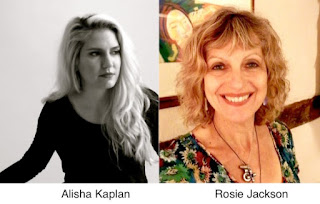
Competing for the top award in the Open category are poets Claire Collison from London, England, Rosie Jackson from Somerset in England and Alisha Kaplan from Toronto in Canada.

In the running for the £500 Young Poet Award are from the USA, Rachel Litchman, Michigan, Joyce Zhou, Illinois, and Erin O'Malley, Pennsylvania; from the UK Roberta Maia Sher, London and Izzy Wythe, Oundle; and from Singapore Vernon Yian.


The judges also agreed a record twenty-nine commendations in the Health Professional category, reflecting the high quality of entries, with a further sixteen poems commended in the Open category, from poets from around the world: the UK, Ireland, the USA, Canada, Australia, Singapore, the Philippines and Switzerland.

The winners will be announced at Harvard on Saturday 6th May at an international symposium on poetry and medicine. There is still time to register for the Awards ceremony and the symposium on 6th May and for the associated event at the Boston Museum of Fine Art on ‘Poetry and Training the Eye’ on Friday 5th May.

The Hippocrates Prize attracts health professionals and established poets alike, with entries this year from over 30 countries. This year, themes have ranged from illness in children to recovery from depression and from cancer to treating victims in conflict zones.

The judges for the 2017 Hippocrates Awards are paediatrician and Emmy Award-winning producer of ER, Neal Baer; celebrated poet and Boylston Professor of Rhetoric and Oratory at Harvard, Jorie Graham; Scottish Makar (National Poet) and novelist, Jackie Kay; and New York Professor of Psychiatry and poet, Owen Lewis. The Young Poet category (for writers aged fourteen to eighteen) was judged by New York writer and teacher Maya Catherine Popa.

Neal Baer observed: ”Here the ordinary becomes extraordinary. These poems relate with emotional depth and in fresh and compelling ways what it means to be healthy and sick."

Jorie Graham commented: “That so much raw suffering, clear-sighted understanding of the vicissitudes of fate, and the perhaps lucky accidents of medical knowledge, or chance, or compassion, could find their way through formal intelligence to these pages is barely short of a miracle. It is certainly a testament to the power of the imagination to heal, console, elegize and cry out against the terrible demands of life and destiny. It is hard to forget these voices once one inhabits their particular circumstances, their messages of belief and profound trust in the consolations of beauty.” 

Owen Lewis too was impressed by the skill and compassion shown in the poems: “As a poet and a physician, reading through the entries as one of the judges for this year’s Hippocrates Prize was a real page-turner. This exciting and moving array of poems speaks to the experiences of illness and health, of patient and healer. The poems are written with both immediacy and reflection, with craft and heart-felt expression.”

Scottish National Poet Jackie Kay said: “What an inspiring competition to be part of. The Hippocrates Prize is a mind, body and soul competition. One minute you’re reading a poem from a patient, the next a doctor, the next a nurse, the next a porter, the next a friend, the next a family member. One minute you’re reading a poem set in a standard hospital in the UK, the next a makeshift hospital in Syria. One minute you’re thinking about mental anguish and anxiety, the next death and cancer." 

She added: "The poems are powerful, funny, moving, inspiring, thought-provoking. They show us everything we have in common. They help us with grief and grieving. But above all they make us cherish life, our health, our minutes and our hours. I’d keep these poems about me as my companions. They radiate light.”

“I am very pleased to be supporting this year’s Hippocrates Prize for poetry and medicine,” said patron of the awards Professor Anthony Fretwell-Downing (pictured). “These international awards are an excellent way to encourage people from around the world to take an interest in their health through poetry, as shown this year by entries from over 30 countries. The poems resonate with my sense of creativity.”

The Hippocrates Prize and this year's awards symposium are supported by the healthy heart charity the Cardiovascular Research Trust, philanthropist Professor Anthony Fretwell-Downing, the Hippocrates Initiative and the Arts and Humanities Initiative of Harvard Medical School.

With a prize fund of £6000 /~ USD 7500 for winning and commended poems, the Hippocrates Prize is one of the highest value poetry awards in the world for a single poem. In its 8 years, the Hippocrates Prize has attracted over 8000 entries from over 60 countries, from the Americas to Fiji and Finland to Australasia. 

Notes for editors

For more on the shortlisted poets and the 2017 Hippocrates Awards,
contact +44 7494 450 805 or +1 617 432 5693 or email hippocrates.poetry@gmail.com


The Hippocrates Initiative for Poetry and Medicine – winner of the 2011 Times Higher Education Award for Innovation and Excellence in the Arts – is an interdisciplinary venture that investigates the synergy between medicine, the arts and health.