"Me Medicine vs. We Medicine: reclaiming biotechnology for the common good".
Donna Dickenson. Columbia University Press, New York. 2013.
The key premise of this seductive book by Donna Dickenson is that 'we medicine' - medicine aimed at maximizing the health of the nation, and 'me medicine' - medicine customised for individual patients, are mutually exclusive. The author, an Emeritus Professor of Medical Ethics and Humanities at the University of London, chooses to focus on new molecular diagnostics, including pharmacogenetics and pharmacogenomics, as the major relevant examples of personalised medicines. The author bases much of her argument on her perception of the polarity that 'genetics and genomics reveal more profound truths than other sciences'. However there is no clinical consensus that these are disciplines that operate in isolation. Genetics and genomics complement other medical sciences.
Good therapeutic practice concerns applying a wide range of clinical and laboratory tools to select the right drug(s) for the right disease and the right patient, at the right time, at the right dose, by the right route of administration, and for the right duration. Personal biomarkers of treatment response which should be used as a regular part of good medical practice include age, gender, ethnicity, lifestyle, co-morbidity, concomitant prescribed and non-prescribed regular and occasional medicines, and key lab phenotypes, such as renal and liver function, in addition to emerging pharmacogenetic and pharmacogenomic tests. By using these tools to apply a personal approach to patient management, prescribers are more able to select effective treatment options, and less likely to select treatments that may cause serious adverse effects ..
For more, see my review in Pharmacology Matters, a publication of the British Pharmacological Society.
Friday, 29 November 2013


Friday, 8 November 2013
Drugs and Pharma: a matter of trust?
Medicines have significant costs, both financial and in terms of
serious adverse effects. Treatment
 should therefore only be prescribed
and continued when the benefit outweighs the risk. This presupposes that
health professionals, patients, and policymakers have trustworthy
evidence to support clinical use of medicines.
should therefore only be prescribed
and continued when the benefit outweighs the risk. This presupposes that
health professionals, patients, and policymakers have trustworthy
evidence to support clinical use of medicines.
It is vital that research on medicines is objective in order to show whether proposed treatments are effective for improving clinically meaningful outcomes for patients, how they compare to existing remedies, and the relative and absolute cost implications of adopting the treatment.
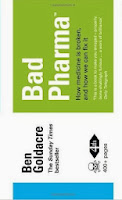
In his seductive polemic Bad Pharma, psychiatrist and 'Bad Science' Guardian columnist Ben Goldacre raises major concerns about the quality of evidence on the efficacy and safety of specific drugs and classes of treatment in clinical use. His book has added to recent public concern about medicines, their safety, and the probity of pharmaceutical companies.
This background concern for the public has been inspired both by works of fiction, for example the film Side Effects, set within a corrupted psychotherapeutic sector, and John Le Carre's African novel The Constant Gardener, which raises important questions about the ethics of clinical research on anti-infective agents in developing countries.
And by a series of very large fines imposed on major pharmaceutical companies for a wide range of reported major errors of omission and commission, including concealed data on safety, and encouragement of doctors to prescribe off-licence, i.e. to patient groups for whom there is no or insufficient evidence on effectiveness or safety of medicines.
See more in reviews in the Reinvention Journal
Ben Goldacre Bad Pharma: How drug companies mislead doctors and harm patients.
London: Fourth Estate. Reprinted with edits: February 5, 2013 | ISBN-10: 0865478007 | ISBN-13: 978-0865478008

It is vital that research on medicines is objective in order to show whether proposed treatments are effective for improving clinically meaningful outcomes for patients, how they compare to existing remedies, and the relative and absolute cost implications of adopting the treatment.
In his seductive polemic Bad Pharma, psychiatrist and 'Bad Science' Guardian columnist Ben Goldacre raises major concerns about the quality of evidence on the efficacy and safety of specific drugs and classes of treatment in clinical use. His book has added to recent public concern about medicines, their safety, and the probity of pharmaceutical companies.
This background concern for the public has been inspired both by works of fiction, for example the film Side Effects, set within a corrupted psychotherapeutic sector, and John Le Carre's African novel The Constant Gardener, which raises important questions about the ethics of clinical research on anti-infective agents in developing countries.
And by a series of very large fines imposed on major pharmaceutical companies for a wide range of reported major errors of omission and commission, including concealed data on safety, and encouragement of doctors to prescribe off-licence, i.e. to patient groups for whom there is no or insufficient evidence on effectiveness or safety of medicines.
See more in reviews in the Reinvention Journal
Ben Goldacre Bad Pharma: How drug companies mislead doctors and harm patients.
London: Fourth Estate. Reprinted with edits: February 5, 2013 | ISBN-10: 0865478007 | ISBN-13: 978-0865478008
Wednesday, 2 October 2013
Not so smart drugs: concerns about modafinil
Modafinil has been in medical use since the late 1980s to improve alertness.
 Because of concerns about serious medical risks, medical use has been
restricted to treating narcolepsy since 2010 by the European Medicines Agency and the UK's Medicines and Healthcare products Regulatory Agency.
Because of concerns about serious medical risks, medical use has been
restricted to treating narcolepsy since 2010 by the European Medicines Agency and the UK's Medicines and Healthcare products Regulatory Agency.

Students and employees,
young and old, are being tempted to use 'smart' drugs to try to improve their
academic or professional performance. This use of modafinil is not medically
licensed - the aim of improving the effectiveness of learning and performance in exams, and
other educational assignments.
The drug is reported to be
in widespread use by
students in Germany, the UK, the US and elsewhere in the hope that it will improve studying, learning and
exam performance.
How is modafinil thought to act? Its mode of action is
unknown. Suggested mechanisms include orexin-mediated enhancement of a range of
brain activation neurotransmitters (norepinephrine, dopamine, histamine,
serotonin) in brain arousal centres; and increased gap junction communication
from brain cell to brain cell.
Does modafinil improve intellectual performance? At best, it is considered no substitute
for a healthy sleep pattern. There have been two types of formal study – those
in well-slept healthy young or older subject; and studies in sleep deprived
subjects. Typically, studies are of a single dose, and medical or psychiatric
disorders, and use of other medical drugs, or recreational drugs (including
caffeine, alcohol and nicotine) are reasons for exclusion from studies of
modafinil.
Studies of possible effects of
modafinil on studying and learning are typically based on artificial tests – ie
do not test for possible benefits of the drug on what students may be trying to
learn, or results of the types of exams students may be sitting. Results are
conflicting. In high IQ young subjects, performance of highly complex
psychological tests, but not less complex tasks, may be improved. More focused
study, with however increased response time has also been reported.
Anecdotally, students have
reported that the drug appears to lead to more efficient completion of a
deadline but not improvement in content. However these perceptions are
vulnerable to placebo responses.
Only a handful of good quality
studies have been performed on the possible effects of modafinil on cognition. These have involved psychological
model tests, not studies of how well students learn course or professional
materials. There remains the need for study of effects and risks of repeated use of modafinil in real world settings
using tests relevant to the study activities of students.
Side effects? There are many – from loose bowels, to loss of effectiveness of the
oral contraceptive pill, leading to unwanted pregnancy, and rare but
life-threatening and fatal skin reactions Stevens-Johnson
Syndrome).
Further important side effects
include sleep disturbance and neuropsychiatric disorders indirect reasons why performance might be impaired by
the drug.
There are also reports by users
that in response to modafinil too much focus on details may make it difficult both to
complete an assessment and to consider a broad enough range of issues to give a
complete answer.
Is use of modafinil any different from using caffeine? Because of the lack of convincing evidence of real world benefit from modafinil and concerns about serious risks, the drug is not approved for use in the absence of a specified medical condition. There are to date no convincing studies showing a benefit from modafinil in long-term use or for specific types of learning or testing relevant to students.
Risks of modafinil may be greater
if there are unrecognized problems, in particular if the user has a medical history
of cardiovascular or psychiatric problems. Use without clinical advice may mean
that important underlying conditions are not identified, for example high blood
pressure, disorders of heart rhythm, and psychiatric risk; and potential
important interactions with other drugs (including other stimulants) may not be
considered.
Modafinil has clinically
significant effects on the activity of liver enzymes and drug transporters
which are important in the handling and clearance of a wide range of common
drugs, including digoxin and warfarin.
Older people are more likely to have medical disorders and to be on treatment which might lead to increased risk from modafinil. A particular concern is that these markers of increased risk may not be considered when off-licence supplies are being sought in the hope that there may be benefit for professional work, or as an aid to studying – for example for revalidation.
Older people are more likely to have medical disorders and to be on treatment which might lead to increased risk from modafinil. A particular concern is that these markers of increased risk may not be considered when off-licence supplies are being sought in the hope that there may be benefit for professional work, or as an aid to studying – for example for revalidation.
Is use of modafinil any different from using caffeine? Because of the lack of convincing evidence of real world benefit from modafinil and concerns about serious risks, the drug is not approved for use in the absence of a specified medical condition. There are to date no convincing studies showing a benefit from modafinil in long-term use or for specific types of learning or testing relevant to students.
As for other drugs, the balance between risk and
benefit must be considered by prescriber and user. In the event of any benefit
for studying from the drug, others not using it are put at a disadvantage.
In contrast caffeine is widely available for those
who chose to use it. Too much caffeine, or sensitivity to caffeine can cause
troublesome symptoms, including anxiety, tremor, sleep disturbance and
palpitations.
Risks from accessing modafinil from internet pharmacies? For the above reasons, licensed
pharmacies would not supply modafinil in the absence of specified medical
conditions. Unlicensed internet pharmacies should be avoided. The quality of medicines is not
reliable, with serious risk of being supplied poorly active or counterfeit or
contaminated medicines. And medical contra-indications need to be identified
and discussed to minimize the risk of preventable serious adverse effects.
Fairness and coercion There are also a number of ethical concerns including: the need to protect students and
others from using so-called ‘smart drugs’ in response to pressure to compete,
both in exams and in professional life; being fair to other students who
do not have access to the drug, or do not wish to use what may be a medically
harmful pharmacological aid to improving performance in examinations or to meeting challenges at work.
See also
- June 2009: Opposing opinions in the British Medical Journal from John Harris and Anjan Chatterjee
- Methylphenidate (Ritalin) – does use by ‘healthy’ students matter?
Tuesday, 24 September 2013
Science meets life and death in Venice
In
Venice during this weekend, a major international organisation was launched: the

Within the increasingly administered and technical world of medicine, patients
often find it difficult to engage with prevention and treatment of common and
serious medical problems.
Poetry
provides a huge opportunity for patients to gain insight into their illness, as
well as to help health professionals to understand better the concerns of their
patients.
Applications are welcome from anywhere in the world to join the
Hippocrates Society for Poetry and Medicine from health professionals and
patients, from poets and academics, and others who are interested in our aims.
Tuesday, 10 September 2013
Chemical genomics, bioactive molecules and alternative reading frame proteins: clues to sudden cardiac death
The cardiac drug flecainide was developed to prevent and treat serious ventricular tachycardia arrhythmias - very rapid heart rates which, if unchecked, can be lethal. However, in clinical trials, flecainide and its sister molecular encainide were reported to more than double the risk of sudden cardiac death.
Joint work by researchers in Chemistry and Medicine at the University of Warwick, and at the Biotech Company SEEK, is now allowing insight into how cardiac death risk might be increased by these drugs. The methods involve persuading viruses to provide a read-out on their surface of proteins related to human diseases.
In experiments just published in the Royal Society of Chemistry journal Chem Comm, we show that proteins from the heart may be read abnormally - through slippage in the letters of the genetic code for heart muscle components - these are called alternative reading frame proteins, a bit like a very simple old cipher.
Furthermore, flecainide is able to interact with a particular abnormally read protein. Previous research has linked this type of abnormality to serious side-effects of a drug used to treat the developing world parasitic infection Schistosomiasis.
There are two obvious implications of our new work. Testing for these abnormal proteins could be a new way to identify people and their family members who should be protected from risk of serious cardiac problems - for example by avoiding triggers of heart arrhythmias and by considering implantable defibrillators.
And by understanding how flecainide interacts with the abnormal protein, there may be clues to new treatments to interfere with the part of protein linked to cardiac problems.
Adverse effects of drugs can be very serious. When chosing a medicine, prescribers need to be aware of the balance of risks and benefits, and to chose the right drug for the right patient and the right disease, at the right time and for the right duration - long enough but not too long.
However our work shows an unexpected consequence of adverse effects of a drug: providing clues to new causes for disease and new ideas for treatments.
Joint work by researchers in Chemistry and Medicine at the University of Warwick, and at the Biotech Company SEEK, is now allowing insight into how cardiac death risk might be increased by these drugs. The methods involve persuading viruses to provide a read-out on their surface of proteins related to human diseases.
In experiments just published in the Royal Society of Chemistry journal Chem Comm, we show that proteins from the heart may be read abnormally - through slippage in the letters of the genetic code for heart muscle components - these are called alternative reading frame proteins, a bit like a very simple old cipher.
Furthermore, flecainide is able to interact with a particular abnormally read protein. Previous research has linked this type of abnormality to serious side-effects of a drug used to treat the developing world parasitic infection Schistosomiasis.
There are two obvious implications of our new work. Testing for these abnormal proteins could be a new way to identify people and their family members who should be protected from risk of serious cardiac problems - for example by avoiding triggers of heart arrhythmias and by considering implantable defibrillators.
And by understanding how flecainide interacts with the abnormal protein, there may be clues to new treatments to interfere with the part of protein linked to cardiac problems.
Adverse effects of drugs can be very serious. When chosing a medicine, prescribers need to be aware of the balance of risks and benefits, and to chose the right drug for the right patient and the right disease, at the right time and for the right duration - long enough but not too long.
However our work shows an unexpected consequence of adverse effects of a drug: providing clues to new causes for disease and new ideas for treatments.
Monday, 9 September 2013
Cutting nerves in the neck to treat high blood pressure?
According to an experimental study published in Nature Communications, severing key nerves in the
 neck may provide a new option for lowering high blood pressure.
Considering new approaches to treating high blood pressure (hypertension) is crucial. High blood pressure is a very common and important cause of disease and death resulting from problems with the heart, and with the blood vessels in the body and brain.
Treatment to lower high blood pressure is supposed to continue for decades. However, even by 12 months after the starting treatment, around 50% of patients are not taking their tablets regularly, if at all.

See more ...
Considering new approaches to treating high blood pressure (hypertension) is crucial. High blood pressure is a very common and important cause of disease and death resulting from problems with the heart, and with the blood vessels in the body and brain.
Treatment to lower high blood pressure is supposed to continue for decades. However, even by 12 months after the starting treatment, around 50% of patients are not taking their tablets regularly, if at all.
See more ...
Thursday, 8 August 2013
Leprosy, from old Spittals to modern times
The Berwick-on-Tweed leper hospital (Spittal) is said to have been established in 1234, at what is now called Spittal Beach. This coincides with the middle of the peak of reported leprosy in Great Britain as being 12th and 13th centuries. London eventually had 10 hospitals for lepers
on main routes out of the city. The last recorded case of leprosy in London was said to be in 1559. St Bartholomew was associated with lepers in medieval times, with associations between leper hospitals and churches named after the saint both in Berwick and near London. The name leprosy is derived from the Greek word for scales (lepra), the disease discussed by Hippocrates, with evidence that it was known in Ancient Egypt at least 6000 years ago.
What was like to be leper in medieval times? Lepers lost their rights under common law, including property rights. They were excluded from places where people gathered. They had to carry a bell to warn others of their presence. They were isolated, typically sent away to remote hospitals with chapels, as lepers were expected to follow Christian rule. Hospitals were usually run by religious orders. The reportedly well-funded Berwick hospital was later by Royal Charter of James 1 of Scotland in the charge of the King's Chaplain, Thomas Lauder.
Squints or hagioscopes allowed people with leprosy and other infectious diseases to view the sacraments from outside a church of without coming into contact with the healthy members of the congregation.
Historically people with leprosy were recognized because of resulting deformities and were shunned because of fear of contagion. Untreated, leprosy could progress, causing serious disease and deformity to nerves, skin, nerves, limbs and face, including flattening of the nose due to destruction of underlying cartilage, and associated changes in the quality of speech.
A stone tower was erected at the Spittal in Berwick in 1369 as look-out point and protection from raids over the nearby border by the Scots. The buildings were demolished and nothing above ground remains.
We now know that the
disease is caused by a bacterium similar to the one that causes
tuberculosis: the leprosy version - mycobacterium leprae - discovered by
Paul Hansen, leading to the eponymous name Hansen's disease for
leprosy. There is a wide spectrum of clinical features of leprosy. The main route of spread to susceptible people considered to be by nasal droplets (from coughing and sneezing). Risk of acquiring the infection appears linked to causes of impaired cell-mediated immunity, prolonged exposure to infected patients, and to malnutrition. Although infants may develop the disease, the incubation period may be as long as 30 years.
Does leprosy still exist? The World Health Organization records official data on leprosy from up to
120 national programmes in Member States, results published in the WHO's Weekly Epidemiological Record. From this data, the WHO estimates that one person in 10,000 is affected by the disease (prevalence). New case detection is estimated to have decreased from around 760,000 in 2002 to around 200,000 in 2011 . With early combination
drug treatment before deformity (usually for 6-12 months), outcome of the disease is much
improved. However, patients with treated leprosy may still be
ostracised, especially in rural communities, even if patients are known
to have been treated, because of ignorance about the low risk of
disease transmission and about the success of treatment: people are considered no longer infectious after around one week of treatment and it is estimated that over 10 million people estimate cured of leprosy in past 2 decades.
See
Professor Carole Rawcliffe, Medieval History, University of East Anglia
Leprosy in Medieval England, 2006.
What was like to be leper in medieval times? Lepers lost their rights under common law, including property rights. They were excluded from places where people gathered. They had to carry a bell to warn others of their presence. They were isolated, typically sent away to remote hospitals with chapels, as lepers were expected to follow Christian rule. Hospitals were usually run by religious orders. The reportedly well-funded Berwick hospital was later by Royal Charter of James 1 of Scotland in the charge of the King's Chaplain, Thomas Lauder.
 |
| RC St Clemens, ex Benedictine Cloisters, Bad Iburg |

Historically people with leprosy were recognized because of resulting deformities and were shunned because of fear of contagion. Untreated, leprosy could progress, causing serious disease and deformity to nerves, skin, nerves, limbs and face, including flattening of the nose due to destruction of underlying cartilage, and associated changes in the quality of speech.
A stone tower was erected at the Spittal in Berwick in 1369 as look-out point and protection from raids over the nearby border by the Scots. The buildings were demolished and nothing above ground remains.
 |
| Red staining of organism that causes leprosy |

See
Professor Carole Rawcliffe, Medieval History, University of East Anglia
Leprosy in Medieval England, 2006.
Sharpening memory and cocoa - how interested should you be?
Farzaneh Sorond and colleagues from Harvard and the Mass. General Hospital have attracted worldwide interest in their study published in the US journal Neurology "Neurovascular coupling, cerebral white matter integrity, and response to cocoa in older people".
Listen to interview on the story on BBC local radio
The theme of the interest - from the LA Times to the Belfast Telegraph - is that cocoa "not only soothes the soul, but might also sharpen the mind'.
Why even think that it might? The authors drew on two background concepts:
- Earlier research using sophisticated brain imaging had reported that cocoa intake is associated with an increase in blood flow to the brain; and brain blood flow is linked to intellectual capacity.
- And cocoa contains flavonols, bioactive chemicals present in many foods associated with measures of healthy cardiovascular health, including increasing blood flow to the gray matter of the brain.
The question asked by the researchers was whether previous interest in chocolate containing products and better brain function might be explained by flavonol effects.
To address this they carried out a study in which the design was high quality with regard to a possible effect of flavonols on 2 measures - brain blood flow and a test they used to assess memory.
What did they find? No difference in the effects of flavonol-rich vs low in flavonol cocoas as 2 cups per night for 30 days.
However, they reported a significant improvement in blood flow and in the intellectual function test by 30 days.
Should we all now start drinking large amounts of cocoa? Not yet based in this interesting but small study. To consider my question in a different way, key points arising from this work are:
- does cocoa sharpen the mind?
- does it protect from dementia?
- does it help people with dementia?
With these points in mind:
- the study was small - only 60 participants included and only 18 of these were noted to have improvements with regular cocoa
- the study was only for 30 days - more work would be needed to show whether these apparent benefits would be sustained
- the study was performed in older people - average age 73, who already had risk factors for cardiovascular disease - not safe to generalise study findings to other age groups and to people without cardiovascular risk factors.
- the 70% of volunteers who had normal blood flow and managed the test well at baseline should no improvement with cocoa
- the study was designed to test an effect of flavonols. However there was no time control for the effect of cocoa - e.g. vs other hot drinks. The authors cannot therefore rule out a time effect on their results e.g. people not managing the test well at the start doing better simply through the initial practice
- the tests of brain function were 'Trailing Making Tests' ie involved a timed 'joining the dots' test. It would be important to confirm that more real world aspects of brain function were also improved
- no patients with dementia were included - further studies would be needed to show whether patients with dementia would also benefit and that any benefits were helpful for activities of daily living
Thus results of the study could be explained as an artefact of the study design - ie not be due to the cocoa. At best they only applied to people with identified cardiovascular factors who also already had impaired brain blood flow and difficulty in performing the type of mental activity tests used by the researchers.
And the concern about large amounts of cocoa is the associated increase in dietary sugar and fat intake of typical Western milky cocoa drinks. Neither are good for cardiovascular health, as they increase risk of overweight, high cholesterol, diabetes and high blood pressure. To compensate for those risks, the researchers under the strict conditions of the study made sure their volunteers made appropriate adjustments in other parts of the diet to balance sugar and fat intake over the month. In real world use, even if cocoa were confirmed to be helpful for the brain, it would be very important that people increasing their cocoa intake were very careful to avoid these unintended consequences of increased cocoa intake. Of note the researchers were not studying cocoa with added cream and marshmallows - not good for the circulation.
What about different sources of chocolate in cocoa? Not addressed by the researchers - except that they appeared to show at least that any benefits were not related to the types of flavonol they studied.
And how about eating chocolate instead? Again - not studied by the researchers. And in previous observational research on chocolate, there was an apparent benefit on heart disease protection from very small amounts (chocolate 1-3 times per month) with larger amounts reported to be harmful for the heart.
As a final thought, one of the reported uses by ancient Aztecs and Incas of chocolate drinks was as sedatives in religious rituals. Another explanation for the study findings is that calming effects of cocoa ('soothing the soul') reduced anxiety during the tests as a contribution to the observed improvements in brain blood flow and test performance with the drinks.
Link to interview 8.8.13 with Shane O'Connor on BBC local radio
Listen to interview on the story on BBC local radio
The theme of the interest - from the LA Times to the Belfast Telegraph - is that cocoa "not only soothes the soul, but might also sharpen the mind'.
 |
| Fruit of the theobroma cocoa tree: Corti et al. Circulation 2009 |
- Earlier research using sophisticated brain imaging had reported that cocoa intake is associated with an increase in blood flow to the brain; and brain blood flow is linked to intellectual capacity.
- And cocoa contains flavonols, bioactive chemicals present in many foods associated with measures of healthy cardiovascular health, including increasing blood flow to the gray matter of the brain.
The question asked by the researchers was whether previous interest in chocolate containing products and better brain function might be explained by flavonol effects.
To address this they carried out a study in which the design was high quality with regard to a possible effect of flavonols on 2 measures - brain blood flow and a test they used to assess memory.
What did they find? No difference in the effects of flavonol-rich vs low in flavonol cocoas as 2 cups per night for 30 days.
However, they reported a significant improvement in blood flow and in the intellectual function test by 30 days.
Should we all now start drinking large amounts of cocoa? Not yet based in this interesting but small study. To consider my question in a different way, key points arising from this work are:
- does cocoa sharpen the mind?
- does it protect from dementia?
- does it help people with dementia?
With these points in mind:
- the study was small - only 60 participants included and only 18 of these were noted to have improvements with regular cocoa
- the study was only for 30 days - more work would be needed to show whether these apparent benefits would be sustained
- the study was performed in older people - average age 73, who already had risk factors for cardiovascular disease - not safe to generalise study findings to other age groups and to people without cardiovascular risk factors.
- the 70% of volunteers who had normal blood flow and managed the test well at baseline should no improvement with cocoa
- the study was designed to test an effect of flavonols. However there was no time control for the effect of cocoa - e.g. vs other hot drinks. The authors cannot therefore rule out a time effect on their results e.g. people not managing the test well at the start doing better simply through the initial practice
- the tests of brain function were 'Trailing Making Tests' ie involved a timed 'joining the dots' test. It would be important to confirm that more real world aspects of brain function were also improved
- no patients with dementia were included - further studies would be needed to show whether patients with dementia would also benefit and that any benefits were helpful for activities of daily living
Thus results of the study could be explained as an artefact of the study design - ie not be due to the cocoa. At best they only applied to people with identified cardiovascular factors who also already had impaired brain blood flow and difficulty in performing the type of mental activity tests used by the researchers.
And the concern about large amounts of cocoa is the associated increase in dietary sugar and fat intake of typical Western milky cocoa drinks. Neither are good for cardiovascular health, as they increase risk of overweight, high cholesterol, diabetes and high blood pressure. To compensate for those risks, the researchers under the strict conditions of the study made sure their volunteers made appropriate adjustments in other parts of the diet to balance sugar and fat intake over the month. In real world use, even if cocoa were confirmed to be helpful for the brain, it would be very important that people increasing their cocoa intake were very careful to avoid these unintended consequences of increased cocoa intake. Of note the researchers were not studying cocoa with added cream and marshmallows - not good for the circulation.
What about different sources of chocolate in cocoa? Not addressed by the researchers - except that they appeared to show at least that any benefits were not related to the types of flavonol they studied.
And how about eating chocolate instead? Again - not studied by the researchers. And in previous observational research on chocolate, there was an apparent benefit on heart disease protection from very small amounts (chocolate 1-3 times per month) with larger amounts reported to be harmful for the heart.
As a final thought, one of the reported uses by ancient Aztecs and Incas of chocolate drinks was as sedatives in religious rituals. Another explanation for the study findings is that calming effects of cocoa ('soothing the soul') reduced anxiety during the tests as a contribution to the observed improvements in brain blood flow and test performance with the drinks.
Link to interview 8.8.13 with Shane O'Connor on BBC local radio
Sunday, 4 August 2013
Distinguished barrister Robert Francis QC joins 2014 Hippocrates Prize Judges
The judging panel for the 2014 Hippocrates Prize for Poetry and Medicine includes poet Philip Gross, a winner of the TS Eliot Prize, and distinguished barrister Robert Francis QC.
Philip Gross’s The Water Table won the T.S.Eliot Prize 2009, I Spy Pinhole Eye Wales Book of The Year 2010, and Off Road To Everywhere the CLPE Award for Children’s Poetry 2011. Deep Field (2011) deals with voice and language, explored through his father’s aphasia, and a new collection, Later, is due from Bloodaxe in Autumn 2013. He has published ten novels for young people, including The Lastling, has collaborated with artists, musicians and dancers, and since 2004 has been Professor of Creative Writing at Glamorgan University, where he leads the Masters in Writing programme.
Robert Francis QC is a distinguished barrister who specialises in the NHS and medical negligence. He has been a Queen's Counsel for 21 of his 40 years at the bar. He has been involved in many inquiries into the NHS, both as barrister and as chair, most recently chairing the inquiry into the Mid Staffordshire Hospital. According to Peter Walsh, chief executive of the patient safety charity Action against Medical Accidents, Robert Francis has a "passion for justice in healthcare and improving healthcare more generally".
 |
| Photo of Philip Gross by Stephen Morris |
Robert Francis QC is a distinguished barrister who specialises in the NHS and medical negligence. He has been a Queen's Counsel for 21 of his 40 years at the bar. He has been involved in many inquiries into the NHS, both as barrister and as chair, most recently chairing the inquiry into the Mid Staffordshire Hospital. According to Peter Walsh, chief executive of the patient safety charity Action against Medical Accidents, Robert Francis has a "passion for justice in healthcare and improving healthcare more generally".
Sunday, 7 July 2013
Young pharmacologists from 5 continents at EACPT Clinical Pharmacology Summer School
Over 120
young and senior pharmacologists from 5 continents attended the EACPT
Summer School in Edinburgh 4-6 July:
half the young clinicians and researchers from the UK and half from
around the world: continental Europe, from Estonia and Lithuania to Denmark and Spain, 16
from China, others from Australia and elsewhere.

Hear the podcast
from delegates at the EACPT Summer School from 6 European countries
talking about why
they came and how useful they found the EACPT Summer School in
Edinburgh: Eglė Svitojūtė, Lithuania; Morten Rix Hansen, Odense,
Denmark; Aurelija Noreikaite, Lithuania; Gareth Barnes, London, UK;
Alexandra Androu,
Romania; Madli Pintson, Tartu, Estonia; Julia Daragrjati, Padua, Italy.
EACPT Summer Schools consist of keynote presentations and workshops on all aspects of clinical
pharmacology by invited expert speakers, poster presentations, and social events. There is a strong interactive element and
ample opportunity for delegates to network with speakers.
See also information on the 11th
EACPT Congress in Geneva: 28th - 31st August, 20
Subscribe to:
Posts (Atom)