archaeology from sunken ancient cities on the Nile Delta (the lost cities of Thonis-Heracleion and Canopus). The exhibition highlighted trade, cultural and religious exchange among old Mediterranean civilizations and in particular interchange between ancient Greece and ancient Egypt. Examples were featured of a major Hellenised Egyptian deities. A fascinating element of the exhibition was discussion of a Temple for Incubation as a way to cure ills, the granite building long submerged in soft sands, its disappearance accelerated with the sands became liquid due to seismic activity. It
is intriguing to note the siting of an important temple for incubation on the
Nile delta, as the name for ancient Egypt was Kemet (‘km.t’) after black earth of the Nile
Delta. The aim of sleeping the night in the temple was to allow incubi - bad dreams - to carry away toxic humours as causes of illness and so heal the sufferers - in return for generous donations. This practice reflected widespread tradition linking dreams to temples, and the release of dreams as a way to cure disease: the ancient culture of visits to oracular shrines (oracles) where a god could
be consulted through an inspired priest – the most famous perhaps the Oracle at
Delphi in Western mainland Greece. A common further method to consult a god was
incubation: the inquirer would sleep in the
temple holy place and be rewarded with an answer in a dream. This would then be
interpreted by the priest with an often ambiguous answer. Cures
might also be delivered through a dream: for example at the oracle to
Amphiaraus at Oropus in Attica, the temple to the god of medicine Asclepius at
Epidaurus, the oracle of Dionysus at Amphicleia, and the oracle of Trophonius in
Levadhia. Ancient
Egyptian medicine is
considered to date at least to the 27th century B.C.E. to the time when the Old
Kingdom physician and architect Imhotep was the Vizier of Djoser. Imhotep was later deified. A key
belief was that disease could be caused by an angry god or an evil spirit.
However the Egyptians of the time were pragmatic in formulated effective
treatments.
Sources for ancient Egyptian scientific medical
practices include the Papyrus on surgical trauma bought by Edwin Smith in 1862 and dating to ~1600 B.C.E and
credited to the much earlier Imhotep; and the Papyrus dating to 1500 B.C bought
by Georg Ebers in 1873 at Luxor. The latter papyrus includes more than 700 remedies and spells to be used to
ward off disease-causing spirits.The ancient texts also describe dreams and how
to interpret them. Priests played a key role in prescription of
how to live as a way to avoid disease. There
were healing sanctuaries affiliated to temples where physician-priests could
prescribe for the healthy and treat patients. Purification
included special diets, ritualized bathing and removal of all body hair. The
patient could also be required to maintain a specific diet including what were
considered to be unclear fish and animals. Perhaps via or influencing
Hippocratic sources, diet might include involving fava beans (now recognized
now as a precipitate for anaemia in people deficient in the enzyme
glucose-6-phosphate dehydrogenase, a genetic disorder common in the Eastern
Mediterranean and in Sub-Saharan Africa).
Medical charity the FPM is organising a one-day meeting on
Updates on Cancer on 29th September at the Royal Society of Medicine, 1
Wimpole Street, London.
Consultant Oncologist Professor Robert Thomas will discuss the evidence on benefits of lifestyle
and nutrition after cancer, at a one-day meeting on Updates on Cancer
on 29th September at the Royal Society of Medicine, 1 Wimpole Street,
London organised by the FPM.
He said: “With 1:3 getting cancer and 3 million people living with
the consequences of this disease at any one time in the UK, and the cost
of care increasing, the case for developing effective, self-help
initiatives has never been stronger.”
His talk “summarises the international evidence, which shows that
physical activity, nutrition and other lifestyle strategies can
substantially reduce the risk of relapse and minimise numerous late
effects ranging from fatigue, weight gain, anxiety, hot flushes,
arthralgia.”
He added that his talk will “highlight the biological processes that
take place in the body after a healthy lifestyle, which can have direct
and indirect anti-cancer effects. By looking only at the scientific
evidence, it breaks down the myths behind which foods to avoid and which
to eat more of. It discusses the risks the benefits, of mineral and
vitamin supplements and highlights the potential benefits of boosting
the anti-cancer polyphenols in our diet. It summarises the results of
the world’s largest double blind randomised study of a polyphenol rich
food supplement Pomi-T, developed and tested with the help of the UK
government’s National Cancer Research Network (NCRN).”
Professor Robert Thomas is a Consultant Oncologist
at Bedford and Addenbrooke’s Hospitals, a Professor of applied biology
and exercise science Coventry University, a senior clinical tutor at
Cambridge University. He is editor of the lifestyle and cancer website
(Cancernet.co.uk) and designed the 1st UK approved
qualification in cancer rehabilitation. He wrote the evidence review for
the UK’s National Cancer Survivorship Initiative, chairs the Macmillan
Cancer Support Exercise advisory committee and directs an dynamic
research unit, which has designed numerous studies which been published
across the world. For these, and other, efforts to improve the long term
wellbeing of patients he was awarded the British Oncology Association
Oncologist of the Year, the Hospital Doctor Magazine UK Doctor of the
Year and the Royal College, Frank Ellis Medal.
Southampton researcher Dr Lisa Loughney will discuss the benefits of
exercise for people undergoing cancer treatment.
Neoadjuvant treatment is treatment given
as a first step to shrink a tumor before the main treatment e.g. surgery or
radiotherapy.
In her 2016 paper on this theme she noted that neoadjuvant cancertreatment decreases physical fitness and low levels of physical fitness are associated with poor surgical outcome. She added that exercise
training can stimulate skeletal muscle adaptations, such as increased
mitochondrial content and improved oxygen uptake capacity that may
contribute to improving physical fitness. She has therefore evaluated
the evidence in support of exercise training in people with cancerundergoing the “dual hit” of neoadjuvant cancertreatment and surgery.
Dr Loughney works in the National Institute of Health Research’s
Respiratory Biomedical Research Unit at the University Hospital of
Southampton’s NHS Foundation Trust.
Wendy French will discuss her Poet-in-Residency year
at the UCLH MacMillan Cancer Centre.
Working with patients, sharing in their hopes and fears, tracking the
everyday endeavours of a vital medical hub, Wendy French found herself
drawn into lives in which blood tests, diagnosis, chemotherapy and hope
become as much part of the human experience as cappuccino and Vivaldi on
the radio.
Her residency resulted in publication of ‘Thinks itself a Hawk’. In
the collection, one life, that of Zipora, a Jewish woman whose origins
lay in the darkest days of the twentieth century, is chosen for
particular attention for its power to place everyday experience in large
frames, but also for the brightness with which it reminds us that
everyday life is unique and important.
Wendy French was Poet in Residence at the Macmillan
Centre UCLH from April 2014-2015. Her collaboration with Jane Kirwan
resulted in the book Born in the NHS, published in 2013. She
won the inaugural 2010 Hippocrates Poetry and Medicine prize for the NHS
section in 2010 and was awarded the Hippocrates NHS second prize in
2011. She has two chapbooks and two further collections of poetry
published, Splintering the Dark (2005), and surely you know this (2009).
She previously worked twenty years with children and adults with mental
health problems and was head of the Maudsley and Bethlem Hospital
School. She has also worked with people with aphasia/dysphasia, helping
them to recover their use of language through poetry.
This one day symposium will include further sessions on:
risk factors for cancer
evidence for effective strategies aimed at preventing cancer
medical humanities to support patients undergoing treatment for cancer
The
distinguished University of Warwick Chamber Choir are to perform Spiritual and
Shakespeare Song Cycles and A Child of our Time on Wednesday 20th July, 2016 at
the Packington Estate in North Warwickshire in support of the children’s cancer charity CLIC Sargent.
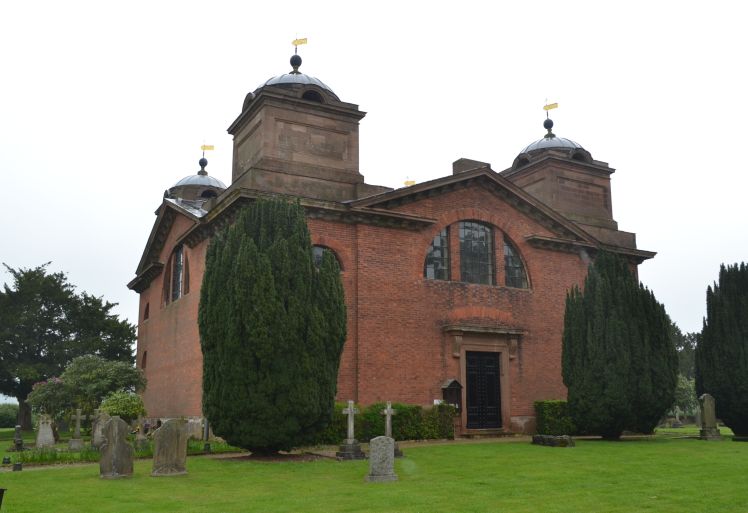
The musical performance will be in the St James’ Church on the Packington Estate in Warwickshire (~ 20 minutes north of Kenilworth).
The performance will be followed by a reception in the Pompeiian Room at Packington Hall, with wine/soft drinks and canapés. TIckets for the concert and the reception are £35 per person.
St James’ Church and Packington Hall are not normally open to the public. The neo-classical St James’ Church was inspired by the Baths of
Diocletian in Rome and has an organ designed by Handel for his
librettist, who was a cousin of the Earl of Aylesbury of the time, owner
of the church and the Packington Estate.
Programme Leigh arr. Woods: Don’t It Make My Brown Eyes Blue Trad. arr. Erb: Shenandoah Tallis: If Ye Love Me Mantyjarvi: Shakespeare Songs Morley: It Was A Lover And His Lass Bennett: Weep O Mine Eyes Passereau: Il est bel et bon Bruckner: Locus Iste Tippett: Spirituals from A Child of Our Time Shearing arr. Carter: Lullaby of Birdland Porter arr. Blackwell: Let’s Do It Map of Packington Hall The children’s cancer charity CLIC Sargent is the UK’s leading
cancer charity for children and young people, and their families. CLIC
Sargent provides clinical, practical, financial and emotional support to
help them cope with cancer and get the most out of life. CLIC
Sargent aims to help the whole family deal with the impact of cancer and
its treatment. CLIC Sargent is active nationally, and locally in the
Warwickshire and Coventry area.
St James’ Church, Packington Estate
The University
of Warwick Chamber Choir performs in Warwickshire and further afield,
with annual tour destinations including Spain, Germany, the Republic of
Ireland, Belgium and Switzerland, as well as regular performances in
London. UWCC have appeared on BBC national television in the Sainsbury’s
Choir of the Year competition, live television in Greece, and on
Central Television with Caliche with whom a CD of Ariel Ramirez’ Latin
American Misa Criolla and Navidad Nuestra was recorded (the British
première recording). UWCC’s wide ranging repertoire spans sacred,
secular and folk music. The UWCC have premiered works by Howard Skempton
and Michael Nyman and have commissioned new works from Joe Cutler and
Jonathan Dove for 2015/16.
The choir’s conductor Lucy Griffiths is the Assistant Director of
Music at the University of Warwick. She studied for her undergraduate
degree in Music at the University of Bristol, where she first discovered
her passion for conducting. She went on to work as a lecturer in Music
at Portsmouth University before being awarded the prestigious sinfonia
ViVA conducting scholarship. This allowed her to complete her masters in
conducting at Birmingham Conservatoire, where she was twice awarded the
Sir Michael Beech conducting prize.
This dream play appears inspired by Martinů's exposure to French surrealism while he was in exile in Paris. Overt themes include the fickleness of memory and desire for forgetfulness. References to violence, loss of memory and wish for forgetfulness are especially poignant in the light of the date and place of the first performance: 16th March 1938 at the National Theatre in Prague.
At the start, Michel is seen as a source of hope of memory regained for other characters in his dream. Later Michel appears to wish to seek refuge in the world of dreams both to capture his ideal woman - Juliette - and to escape from a violent crime he may have committed.
Juliette as temptress through her songs provides a further theme, alluding to Homer, Odysseus and the Sirens, and to the old German Lorelei water spirit myth.
The dreamworld is also portrayed as a source of fear of a vaguely recalled transgression from within the dream itself or from the real world.
How good was it? The orchestra brilliant under Barenboim's baton. The leads were outstanding, especially Magdalena Kožená for her voice and Rolando Villazón for both voice and stamina. His prolonged indecision at the end of the third Act lost him a few audience members - would he return to real life or hide in his dreams? The brass and percussion struggled with the unremitting cascade from the smoke machine into the pit – making it difficult for them to see the conductor, though not obvious from the playing.
A fine touch, at the end of multiple lively curtain calls, the entire pit orchestra on stage with Daniel Barenboim.
For the music, plot and action - you should judge for yourself if you have the chance to go.
In Berlin for the 5th Forum on Companion Diagnostics, organised by the rapidly expanding Brandenburg-Berlin DiagnostikNet of biotech companies and affiliates.
The event has been hosted in the CoLaborator startup building on the former Schering, now Bayer campus. Outside, a volleyball court and all weather table-tennis tables - and a giant chessboard for those wishing to divert the mind.
In the city centre, tremendous buzz around the Brandenburg Gate with an international field
Kestrel with prey in the Tempelhofer Garten in Berlin
of runners, part of the international city move to encourage exercise through amateur runs. The latest field numbers I could find were 25,500 in Berlin for a recent Spring half-Marathon.
In the South of Berlin, an inspiring example of local democracy, Berlin citizens having voted to preserve the former Tempelhof airfield as a vast wild urban common land - the former site of the Berlin Airlift (or air bridge as locally known - DieLuftbrücke: 1948-1949).
This huge space is well worth enjoying while still protected wild city green land.
When I visited, the runways were in use by cyclists of all speeds, stylish rollerbladers, families with pushchairs, and general strollers. There
are numerous copses and tall grasslands rich in birdlife. Within 100
yards of the entrance, a kestrel catching an unlucky field rodent (above the old parachute drop training wires),
sparrows nesting in an abandoned cargo plane, pied wagtail, goldfinch,
wood warbler, swifts and skylarks, common nightingale, chiffchaff ...
Many good examples of making it as easy as possible at work and in leisure time to
Common Redstart in Berlin's Tiergarten
maintain a healthy active lifestyle. This is not only of course a key part of general wellbeing, but well-established to prevent serious diseases. Cardiovascular disease is the most obvious example.
Healthy lifestyle is also well-evidenced as good for preventing cancers, and for providing clinical benefit in patients with cancer, the focus of a one day Updates on Cancer Meeting being organised by the Fellowship of Postgraduate Medicine in London on Thursday 29th September, 2016.
Donizetti's 1832 opera 'L'Elisir d'Amore' is a multi-level satire on reverence for quacks and their
placebos, gullibility of rural communities [set in France, to spare
hostility from Donizetti's native Italian audience] and the
transformative effect of wealth on desire. In an engaging production
[Der Liebestrank], Berlin's Deutsche Oper makes the most of humour and farce in the opera, cheerful choruses belying the critical content of the libretto. Berlin-based American soprano Heidi Stober is a fine Adina - the heroine of the story. Italian tenor Enea Scala as Nemorino is almost undone in his wooing of Adina by the intoxicating effects of an Elixir bought from travelling quack Dolcamara. Nemorino expects the potion to make him irrestible to women - it is in fact wine, rather than the magical potion ascribed by Dolcamara [a showman's performance by Seth Carico] to a recipe from Tristan's Isolde - queen of the Irish. Dolcamara's non-singing assistant at times steals the show with his magician stage-effects.
The quack (from the medieval quacksalver - hawker of salves) came to prominence from the 17th century, with surprisingly not until 1881 the first organisation formed (in the Netherlands) aimedat protecting the public from quacks. Donizetti was inspired by the plot of Tristan and Isolde. This idea in fiction of the effective magic potion dates from ancient mythology e.g. Circe bewitching Odysseus'men and through to Oberon's 'love-in-idleness' in Shakespeare's Midsummer Night's Dream - a different kind of magic, with originsinthe Roman Cupid and the viola. To her credit, Adina rescues Nemorino from his rival, recruiting officer Becorino [Simon Pauly], and she is not deterred by erratic alcohol/placebo induced dalliances of her man [excellent Elbenita Kajtazi as Giannetta leading the inheritance-inspired female interest in newly wealthy Nemorino]. Adina eventually rescues and accepts Nemorino, not realising and therefore not influenced the fact that he has progressed from no prospects to wealthy heir during the action of the opera.
The chorus is large and at best excellent, though esp. in the first act often struggling to keep up with the orchestra and to fine unposed ways to occupy the stage.
The word placebo appears not to have been used in a health context until the late 18th Century, not long before the 1832 premiere of Donizetti's opera. However the concept of the triad of properties of a potion – medicine, poison and magic charm – dates to Ancient Greek meanings of the word φάρμακον (phármakon), as used for example in Homer's Odyssey. Nemorino suffers both the perceived magical effects and actual toxic effects of his alcoholic treatment.
As an aside, Chaucer in his Canterbury Tales, uses Placebo as name and code for the behaviour of a character in The Merchant's Tale: pleasing by flattery to obtain advantage, an interesting parallel to the behaviour of the Dolcamara in the opera.
The distinguished University of Warwick Chamber Choir are to perform
Spiritual and Shakespeare Song Cycles and A Child of our Time on
Wednesday 20th July, 2016 at the Packington Estate in North Warwickshire
in support of the children’s cancer charity CLIC Sargent.
This is the third in an annual series of charity musical evenings organised by the Worsted Weavers Guild of Coventry in support of this national charity, which supports children and their families in the Coventry and Warwickshire area.
The musical performance will be in the St James’ Church on the Packington Estate in Warwickshire (~ 20 minutes north of Kenilworth).
St James’ Church and Packington Hall are not normally open to the public. The event is being held on the Estate by kind permission of the Earl of Aylesbury.
The neo-classical St James’ Church was inspired by the Baths of
Diocletian in Rome and has an organ designed by Handel for his librettist,
who was a cousin of the Earl of Aylesbury of the time, owner of the
church and the Packington Estate.
The performance will be followed by a reception in the Pompeiian Hall at Packington with wine/soft drinks and canapés. TIckets for the concert and the reception are £35 per person.
The children’s cancer charity CLIC Sargent is the UK’s leading
cancer charity for children and young people, and their families. CLIC
Sargent provides clinical, practical, financial and emotional support to
help them cope with cancer and get the most out of life. CLIC
Sargent aims to help the whole family deal with the impact of cancer and
its treatment. CLIC Sargent is active nationally, and locally in the
Warwickshire and Coventry area.
University of Warwick Chamber Choir performs in Warwickshire and
further afield, with annual tour destinations including Spain, Germany,
the Republic of Ireland, Belgium and Switzerland, as well as regular
performances in London and concerts on our own. UWCC have appeared on
BBC national television ... Read more about the event
Catherine Wang from Hong Kong has been awarded
the 2016 Hippocrates Young Poet £500 Award for Poetry and Medicine for her poem
Six pills. Also competing for the £500 Young Poets award were
Mia Nelson, from Denver, USA for love under the scalpel, Audrey Spensley, from
Avon Lake, USA for 3 poems: Dissection, Requiem for a Surgery Scar and
Variations on a Craniotomy, and Amy Wolstenholme from Salisbury in England for
words in the bone.
The awards were announced by Leslie Morgan OBE, DL and Tony Ahearne, patrons of
the healthy heart charity the Cardiovascular Research Trust, which is
supporting the 2016 Hippocrates Young Poet Award.
2016 winner Catherine Wang
Leslie Morgan said: "We are very
pleased that the Cardiovascular Research Trust is supporting
this year’s Young Poet Award in the Hippocrates Prize for poetry and medicine.
This Young Poet Award is an excellent way to encourage young people from around
the world to take an interest in their health through poetry and I am delighted
that we shall continue our support for this major award in 2017 and 2018." Honorable
mentions were awarded to 5 young poets: Cara Nicholson from Oundle, England for
An Unwanted Visitor, Alana McDermott from Oldham, England for Letters Upon The
Sea, Ally Steinberg from New York City, USA for The Jacks, Norviewu Dzimega
from Orpington, England for I am and Naabil Khan from London, England for My
Scars.
This year’s awards were judged by poet Siân Hughes. who announce the winner at
an Awards Ceremony in London on Friday 15th April.
Back row: CVRT Patron Leslie Morgan OBE, DL, Prize organisers Donald Singer and Michael Hulse, CVRT Patron Tony Ahearne; Front row: young poets at the awards, Amy Wolstenholme and Norviewu Dzimega
Judge Siân Hughes said: “Reading a young writer's work is always a huge
responsibility. Misunderstanding someone, missing the point, is such an
unkind, unfriendly thing to do, especially to the young, and no one is more
exposed than when they open themselves to the page.
“These young writers take on stories of illness, fear and loss, staring into
some of the hardest words in the language with honesty and courage. What
struck me about all of these mentioned, was that they showed a love of words as
well as a love of life.
“Those who tackled the subject of mental illness - self-harm, eating disorders,
hallucination - took on a challenge as brave as those who grappled with the
technical language of cancer treatments. I was moved by words about the
agonies of acne and the madness of first love as well as by stories of hospital
corridors and waiting rooms.”
The international Hippocrates Prize for Young Poets is for an unpublished poem
in English on a medical theme by poets aged 14 to 18 years from anywhere in the
world. The 2016 Prize attracted entries from Canada, England, Hong Kong, India,
Indonesia, New Zealand, Nigeria, Norway, Pakistan, Philippines, Scotland, South
Africa, Taiwan and the USA.
More
on the 2016 Hippocrates Young Poet shortlist and honorable mentions. Judge SiânHughes
said: “Reading a young writer's work is always a huge responsibility.
Misunderstanding someone, missing the point, is such an unkind, unfriendly
thing to do, especially to the young, and no one is more exposed than when they
open themselves to the page. “These young writers take
on stories of illness, fear and loss, staring into some of the hardest words in
the language with honesty and courage. What struck me about all of these
mentioned, was that they showed a love of words as well as a love of
life.
“Those who tackled the
subject of mental illness - self-harm, eating disorders, hallucination - took
on a challenge as brave as those who grappled with the technical language of
cancer treatments. I was moved by words about the agonies of acne and the
madness of first love as well as by stories of hospital corridors and waiting
rooms.” Previous Hippocrates Young Poet winners:
- 2013 inaugural
Hippocrates Young Poets Prize - Rosalind Jana from Hereford Sixth Form College in England, for Posterior
Instrumented Fusion for Adolescent Scoliosis;
Notes for
editors For photos of
finalists, biographies and extracts of their poems, call 07447 441666 or email hippocrates.poetry@gmail.com The Hippocrates Initiative – winner of the 2011 Times Higher Education Award for
Innovation and Excellence in the Arts – is an interdisciplinary venture that
investigates the relationship between medicine and poetry.
2016
Hippocrates Prize for Young Poets judge Siân Hughes Siân Hughes' first collection "The Missing" (Salt, 2009)
was long listed for Guardian first book of the year, and won the Seamus Heaney
prize for a first collection. Her sequence of poems about her
mother's breast cancer won second prize in the first Hippocrates awards, and
she and her mother Eleanor Cooke continue to write a shared book
about this illness as treatments continue today. In 1998 Siân set up the Young National Poetry Competition when
she was working for The Poetry Society and she continues to promote young
writers and to work with the National Academy of Gifted and Talented Youth to
support the teaching of creative writing. Siân has been poet in residence in Youth and
Community Centres, a Youth Theatre, a Health Centre, and a sandwich shop, and
is and is currently poet in residence in a Birmingham school when she is not
teaching part time for Oxford University.
Hippocrates
Prize founders Professor
Donald Singer is a clinical pharmacologist. His interests include research on
discovery of new therapies, and public understanding of drugs, health and
disease. He
co-authors Pocket Prescriber, the 8th edition of which will published by Taylor
& Francis in the Summer of 2015. Michael Hulse is a poet and translator of German literature, and is
Professor of creative writing and comparative literature at the University of
Warwick. He is also editor of The Warwick Review.His latest collection
of poetry, Half Life, was chosen as a Book
of the Year by John Kinsella.
2016 Hippocrates
Young Poets Prize is supported by the Cardiovascular
Research Trust, a healthy heart charity
founded in 1996, which promotes research and education for the prevention and
treatment of disorders of the heart and circulation. The charity has a
particular interest in avoiding preventable heart disease through educating
school students.
The
Open International First Prize went to Owen Lewis, a clinical psychiatry
professor at Columbia University, New York City and Visiting Professor at
Einstein Medical College.
About what inspired his winning poem At Tribeca’s
Edge, he said: "My students at Columbia, College of Physicians
and Surgeons, were the inspiration for this poem.
"I
sometimes teach a section of Foundations of Clinical Medicine, a course that
extends over their first three semesters. Coming to the end of our time
together, I felt overwhelmed considering all they had yet to learn, hoping they
would hold onto their optimism and idealism, and humbled by what I had
contributed. The poem is dedicated to them.”
Owen Lewis reading 2016 Hippocrates Open First Prize poem
The
NHS First Prize went to Denise Bundred from Camberley in England. She trained
as a paediatrician in Cape Town and worked as a paediatric cardiologist in
Liverpool.
About
her winning poem she said: "A Cardiologist Seeks Certainty is an
attempt to capture the ache of anxiety as I struggled to define a complex
problem in the chambers and vessels of a baby’s heart, often with the pressing
need for urgent surgery." Denise Bundred reads her 2016 Hippocrates NHS First Prize poem
The
Open Second Prize went to UK poet Anne Ryland from Berwick-on-Tweed and the
Open Third Prize went to poet Jane McLaughlin from London. The NHS Second Prize went to GP Chris Woods from Bury and the NHS
Third Prize to
former consultant haematologist Karen Patricia Schofield from
Crewe.
Judge Rafael Campo said: "It has been tremendously heartening, in this age
of seductive technologies, financial imperatives, and ever more culturally disparate
illness experiences, to read so many stunning poems that remain so deeply
concerned with healing in the broadest and most fundamental sense."
Chris Woods, Anne Ryland, Denise Bundred,
Jane McLaughlin, Karen Schofield and Owen Lewis
He added: "Whether written from the perspective of care providers across
many disciplines, or by patients and their loved ones, the poems submitted for
the Hippocrates awards are an eloquent and powerful reminder of the the
importance of the human imagination in confronting illness. While
medicine may sometimes cure disease, it is poetry, through empathy and a
refusal to look away from human suffering, that always heals."
Judge Wendy French said: “Poems inspired by medical topics help us appreciate
the humanity of medicine. Evidence for this was amply provided by the range of
poems submitted for the 2016 Hippocrates Poetry and Medicine Prizes, with
topics drawing on personal experiences as patients, practitioners and
observers.”
She added: “Despite their diversity, the quality of the best poems stood out,
and the judges were in remarkable agreement about which should be commended or
win awards. It is to be hoped that this important initiative will
continue for years to come.”
Judge Rev. Gareth Powell said: “The Hippocrates Prize has attracted a
refreshingly vivid collection of poetry that links together human experience,
medical precision and the fragility of the human form. In the poems, we
glimpse, and are challenged by, something of the intimacy of medicine.
This is all thanks to the skill of the poets in observation and a discerning
use of language.”
Now in its 7th year, the short-listed entries for the 2016 Hippocrates Prize
for Poetry and Medicine have been selected from around 1000 entries from 40
countries by judges poet Wendy French, Harvard physician and poet Dr Rafael
Campo, and Rev. Gareth Powell, Secretary of the Methodist Church.
With a prize fund of £5500 for winning poems in the Open International category
and NHS category, and £500 for the Young Poets Award, the Hippocrates Prize is
one of the highest value poetry awards in the world for a single poem. In its
first 7 years, the Hippocrates Prize has attracted over 7000 entries from 61
countries, from the Americas to Fiji and Finland to Australasia. Find out more about the winning poets.
The judges also agreed 16 commendations in the NHS category, and 17
commendations in the Open International category from Australia, France,
England, Ireland, Scotland, New Zealand and the USA.
Commended poets at the 2016 Hippocrates Awards: Back row: Catherine Ayres, Wendy Orr, Simon Currie; Middle row: Nicola Jackson, Denise Bundred, Karen Schofield, Sheila Wild; Front Row: Martin Pearce, Tricia Torrington, Helen Gibson, Emma Storr
The Hippocrates
Initiative for Poetry and Medicine – winner of the 2011 Times
Higher Education Award for Innovation and Excellence in the Arts – is an
interdisciplinary venture that investigates the synergy between medicine,
the arts and health.
The International Hippocrates Prize is awarded in three categories:
- an Open category, which anyone in the world may enter;
- an NHS category, which is open to UK National Health Service employees,
health students and those working in professional organisations involved in
education and training of NHS students and staff;
- a Young Poets Award in the international Hippocrates Prize for an
unpublished poem in English on a medical theme. Entries for this award are
open to young poets from anywhere in the world aged 14 to 18 years.
Notes for editors
For more on the Hippocrates Prize and the 2016 judges, contact 07447 441666 or
email hippocrates.poetry@gmail.com Hippocrates website: hippocrates-poetry.com
2016 Hippocrates Judges
Rafael Campo is Associate Professor of Medicine at Harvard Medical School
and Beth Israel Deaconess Medical Center in Boston. He is the author of eight
highly acclaimed books and the recipient of many honors and awards, including a
Guggenheim fellowship, an honorary Doctor of Literature degree from Amherst
College, a National Poetry Series award, and a Lambda Literary Award for his
poetry; his third collection of poetry, Diva (Duke University Press,
2000), was a finalist for the National Book Critics Circle Award, and his
fourth, Landscape with Human Figure (Duke University Press, 2002), won
the Gold Medal from ForeWord for the best book of poetry published by an
independent press.
His work has also been selected for inclusion in the Best American Poetry and
Pushcart Prize anthologies, and has appeared in numerous prominent
periodicals including American Poetry Review, The Nation, The New Republic,
The New York Times Magazine, The Paris Review, Poetry, Salon.com, Slate.com,
Threepenny Review, Washington Post Book World, Yale Review, and elsewhere;
he has also been featured on National Public Radio and the National Endowment
for the Arts website.
He
has lectured widely, with recent appearances at such venues as the Folger
Shakespeare Library, the Library of Congress, and the 92nd Street Y
in New York. His fifth book of poetry, The Enemy, was awarded the Sheila
Motton Book Prize for the best collection of poetry published in 2007 by the
New England Poetry Club, the nation’s oldest poetry organization. In 2009, he
received the Nicholas E. Davies Memorial Scholar Award from the American
College of Physicians, for outstanding humanism in medicine.
He
has also won the 2013 Hippocrates Open International Prize, one of the highest
value awards for a single poem in the world, for original verse that addresses
a medical theme. His newest collection of poems, Alternative Medicine, was
the subject of feature stories on PBS NewsHour and the CBC’s Sunday
Edition radio show. See more information at www.rafaelcampo.com. Wendy French won the inaugural 2010 Hippocrates Poetry and Medicine
prize for the NHS section in 2010 and was awarded second prize in 2011. She has
two chapbooks and two collections of poetry published, Splintering the Dark,
Rockingham press 2005, and surely you know this (the title was taken
from a Sappho fragment) Tall lighthouse press 2009. Her collaboration with Jane
Kirwan resulted in the book Born in the NHS which was published 2013 by
Hippocrates press. She has worked for the past twenty years with children and
adults with mental health problems and was head of the Maudsley and Bethlem
Hospital School. She left this post to concentrate on working with people with
aphasia/dysphasia helping them to recover their use of language through poetry.
She was Poet in Residence at the Macmillan Centre UCLH from April 2014-2015. Rev. Gareth Powell was appointed in September 2015 as Secretary of the
Methodist Conference, one of the most senior positions of Church leadership in
Methodism. He read theology at Westminster College, Oxford then undertook
ministerial training at The Queen's College, Birmingham, obtaining an MA in
Pastoral Theology before spending time at Graduate School at the University of
Geneva. He as served in Coventry and Cardiff, where he was university chaplain.
Since 2010 he has been a member of the Council of Cardiff University.
Hippocrates
Prize Organisers
Professor Donald Singer is a clinical pharmacologist and President of the
Fellowship of Postgraduate Medicine. His interests include research on
discovery of new therapies, and public understanding of drugs, health and
disease. Professor Michael Hulse is a poet and translator of German literature,
and teaches creative writing and comparative literature at the University of
Warwick. He is also editor of The Warwick Review. His latest book of poems, Half-Life
(2013), was named a Book of the Year by John Kinsella.
The 2016 Hippocrates Prize is supported bythe Healthy Heart
Charity the Cardiovascular Research Trust, founded in 1996,
which promotes research and education for the prevention and treatment of disorders
of the heart and circulation.